“Art shapes consciousness”: the ArtMind 2026 International Creative Camp was held in Lithuania
From June 2 to 5, the third ArtMind International Creative Camp took place at the Zen Miškas Eco-Center (Lithuania). This year, the program focused on working with professional actors and served as a platform for intensive exploration and exchange of contemporary theater practices.
Initiated by the Mikhail Chekhov Riga Russian Theater, the project has evolved over the past few years into an international platform for professional development and exchange of experience among theater professionals.
ArtMind 2026’s artistic directors were representatives of the European Humanities University and the Mikhail Chekhov Riga Russian Theatre, combining academic and professional theatre experience.
The main participants in the program were actors from the Mikhail Chekhov Riga Russian Theatre. The camp’s format allowed for a combination of intensive professional work, the exchange of experiences, and joint reflection on contemporary theatrical practices.
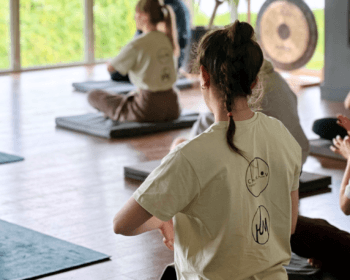
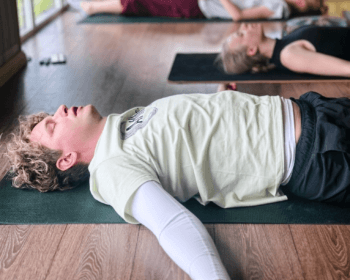
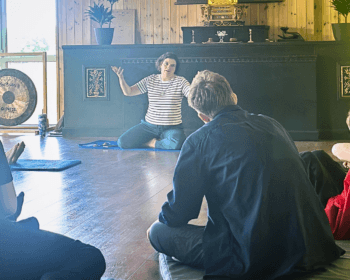
The program included a series of classes based on the Fitzmaurice Voicework® method, led by Olga Polevikova, dedicated to working with the voice, breathing, and the performer’s psychophysical freedom. Another highlight of the program was Konstantin Chechirko’s course “The Fist of the Great Limit,” based on the principles of tai chi and aimed at developing body awareness, coordination, and the quality of movement. The theoretical part of the program consisted of lectures devoted to documentary theater and modern approaches to working with documentary material in theatrical practice.
Participants in the ArtMind creative camp described their experience in various ways, but several key ideas recurred in their feedback. It is intensive work that quickly brings one into a state of aliveness—with engagement, emotion, and high concentration. They noted the practical benefits of the techniques: working with the voice and body was perceived not as abstract training, but as a set of tools that can be immediately applied to stage practice and preparation for a performance. The format of collaborative work itself was cited as an important part of the experience—the opportunity to observe colleagues, experiment, make mistakes, and gain new professional experience within the group.
The ArtMind 2026 event marked another stage in the development of cooperation between the European Humanities University and the Mikhail Chekhov Riga Russian Theatre. The project not only brought participants together around collaborative professional work but also served as a platform for presenting the practices and approaches developed by EHU faculty in an international professional context. At the same time, the camp created a space for discussing new joint educational and creative projects that could become the next step in the development of the partnership between the university and the theater.