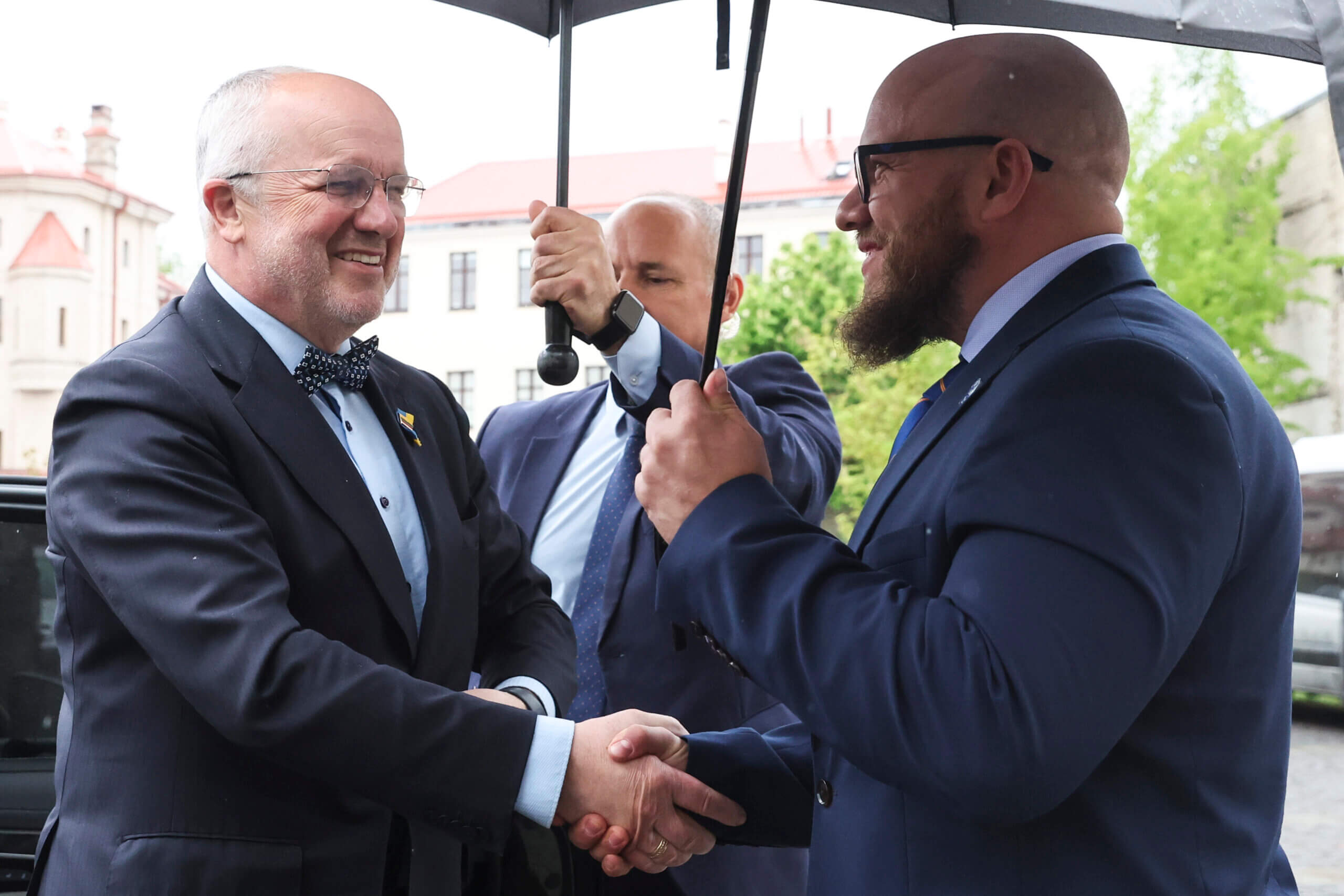
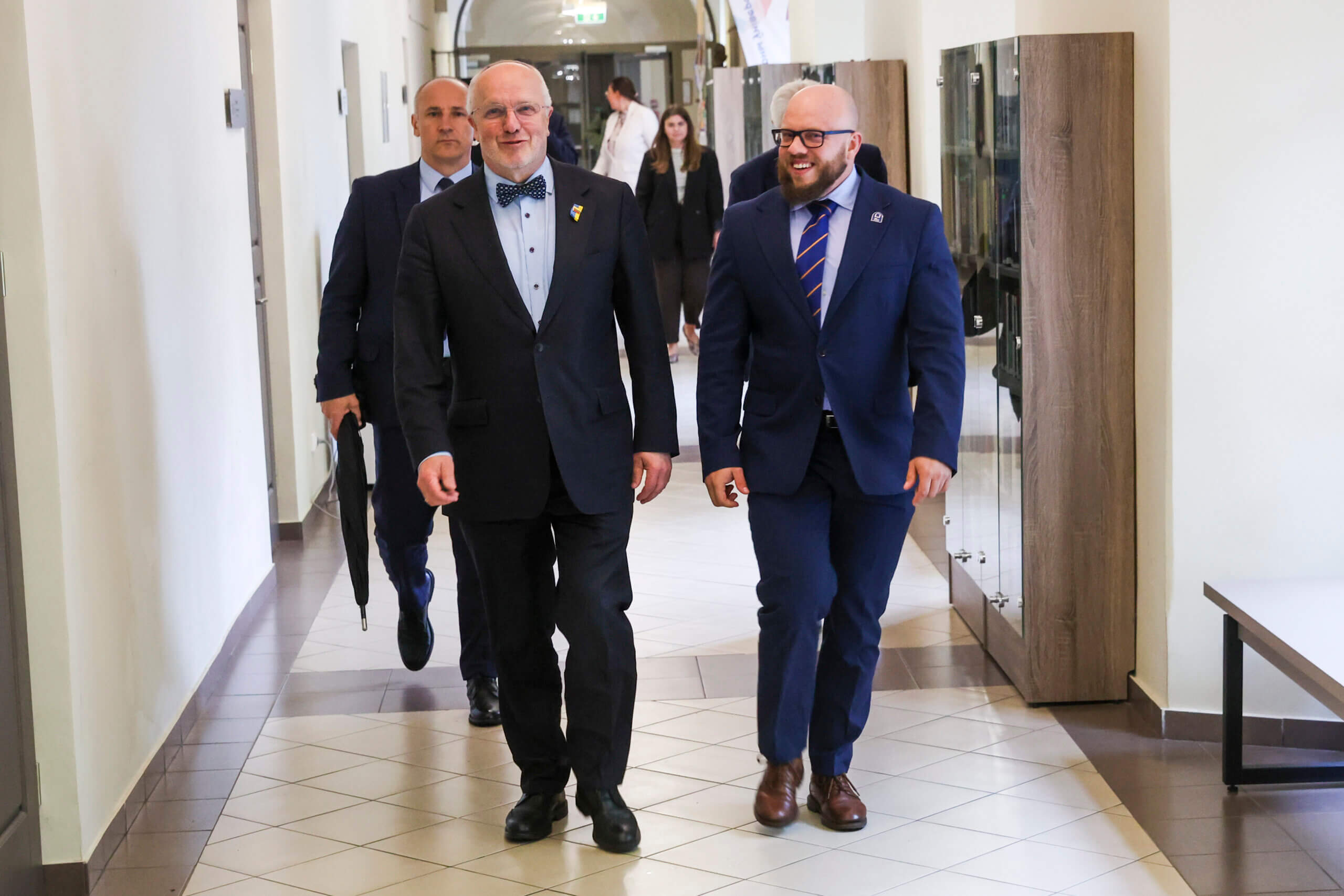
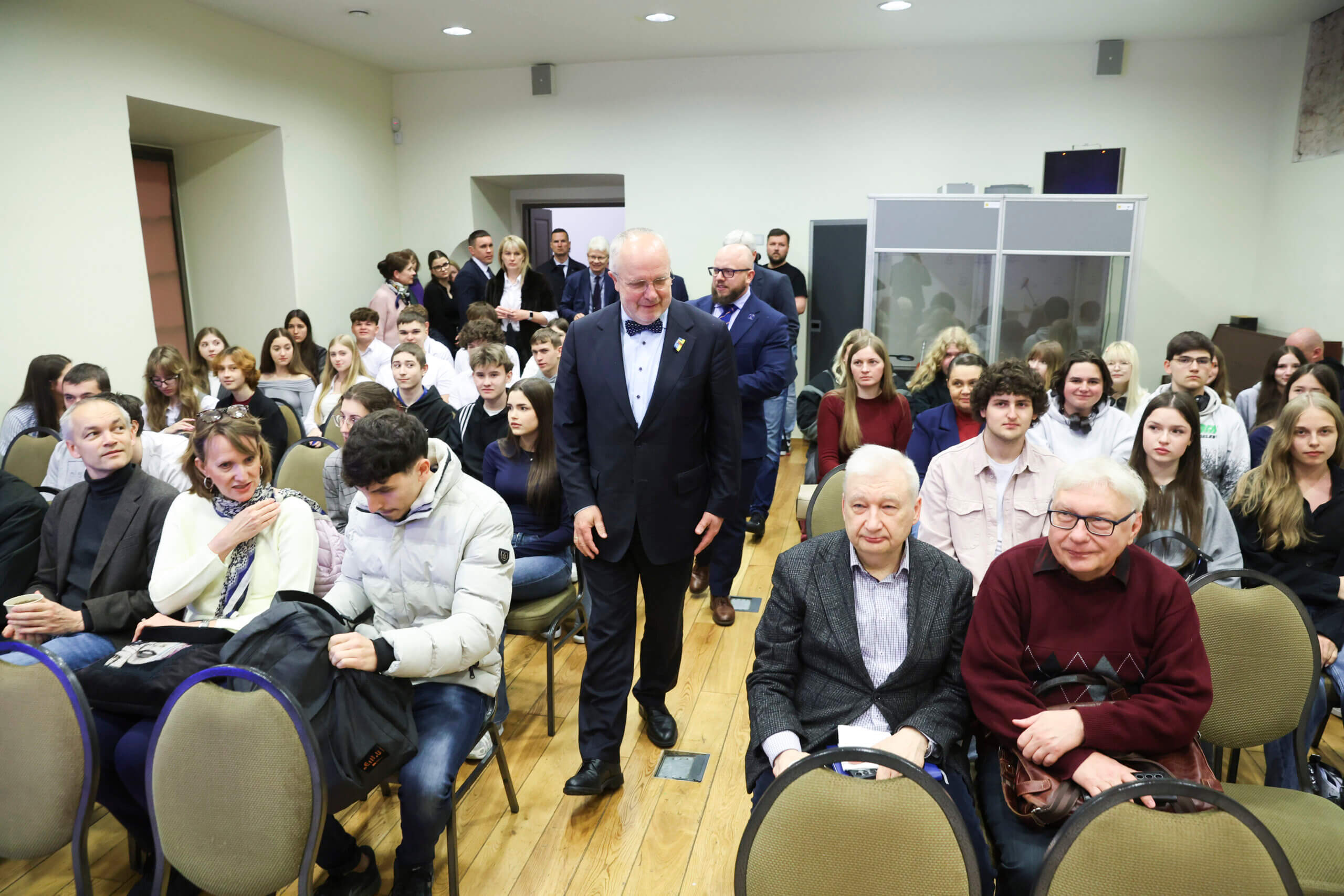
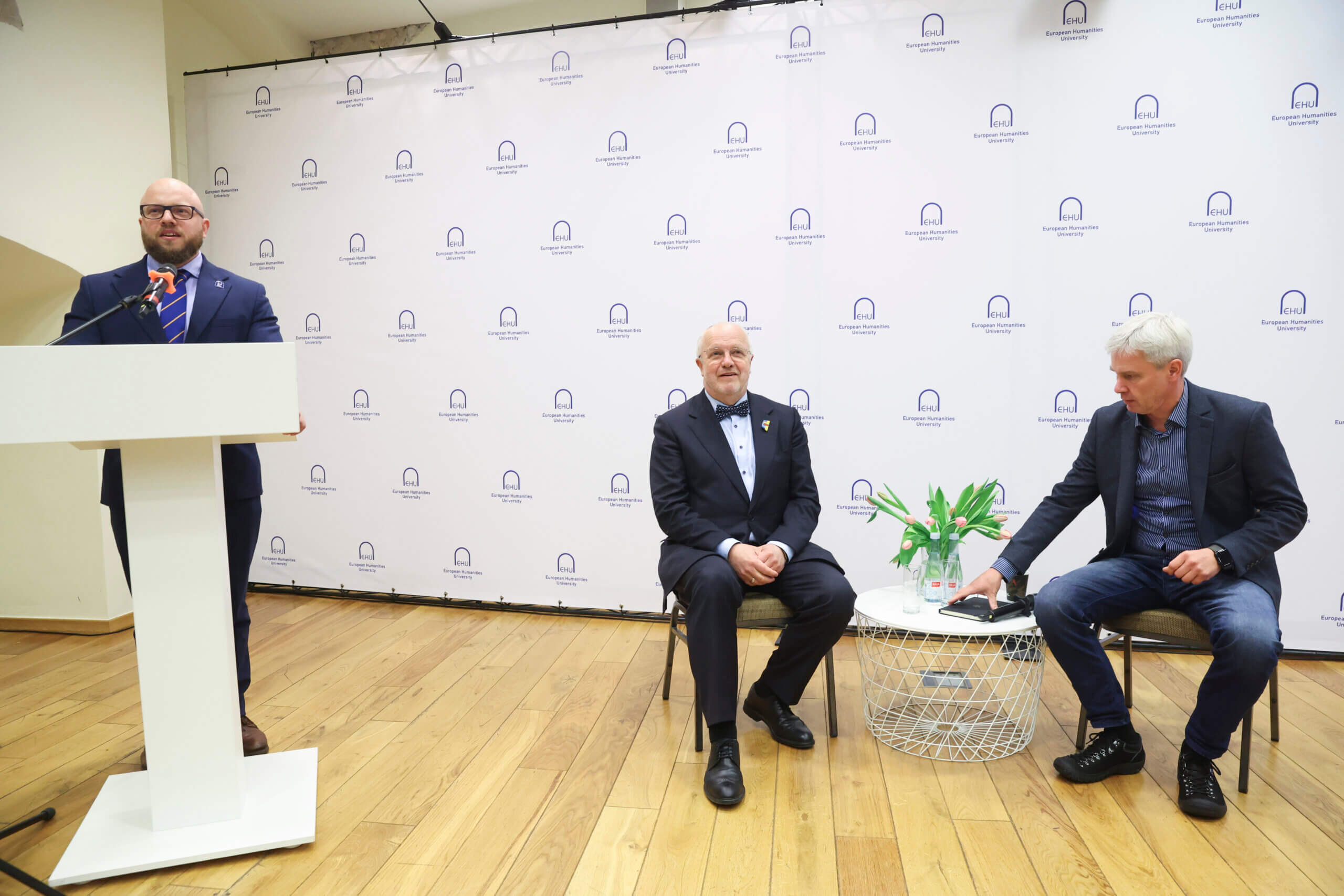
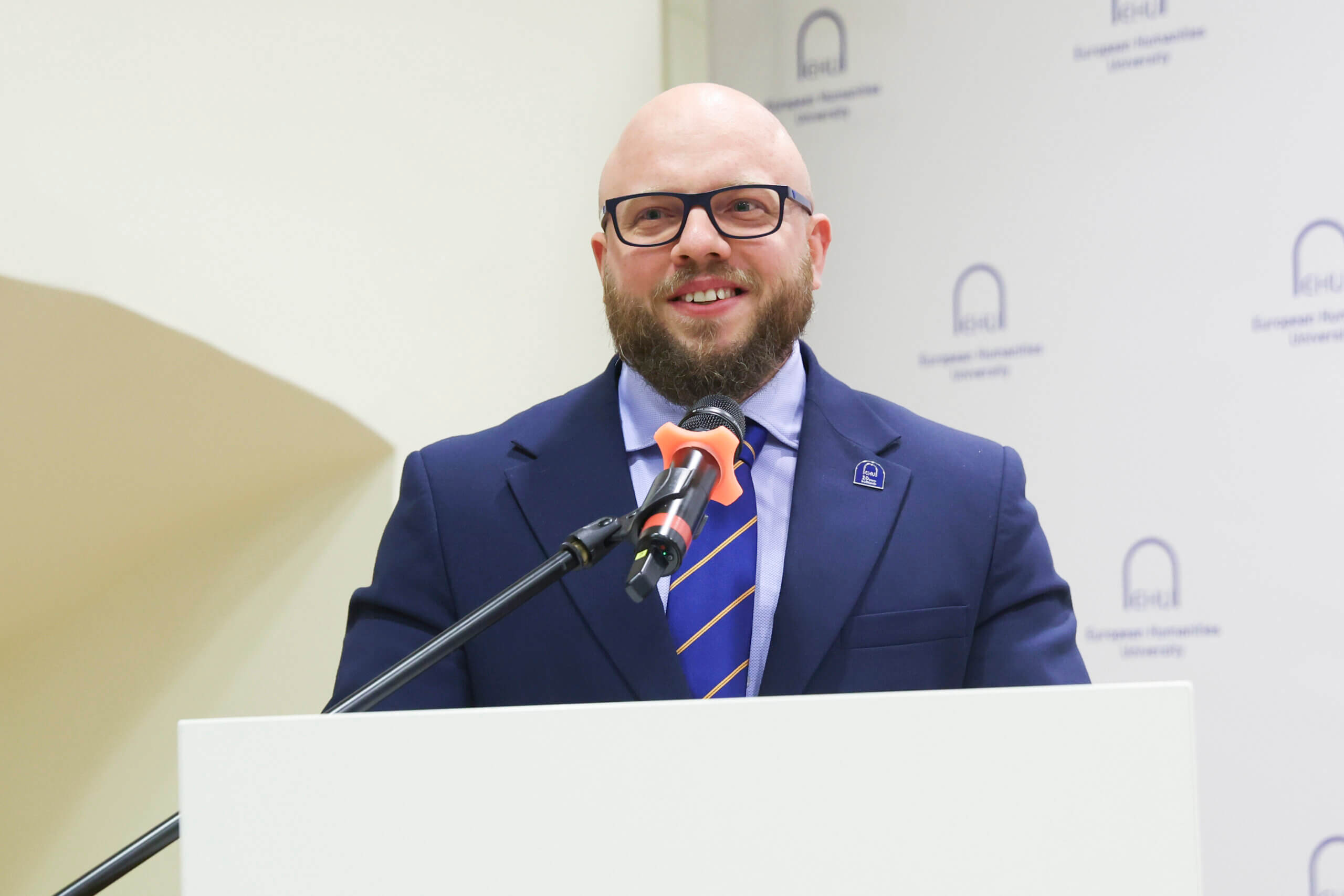
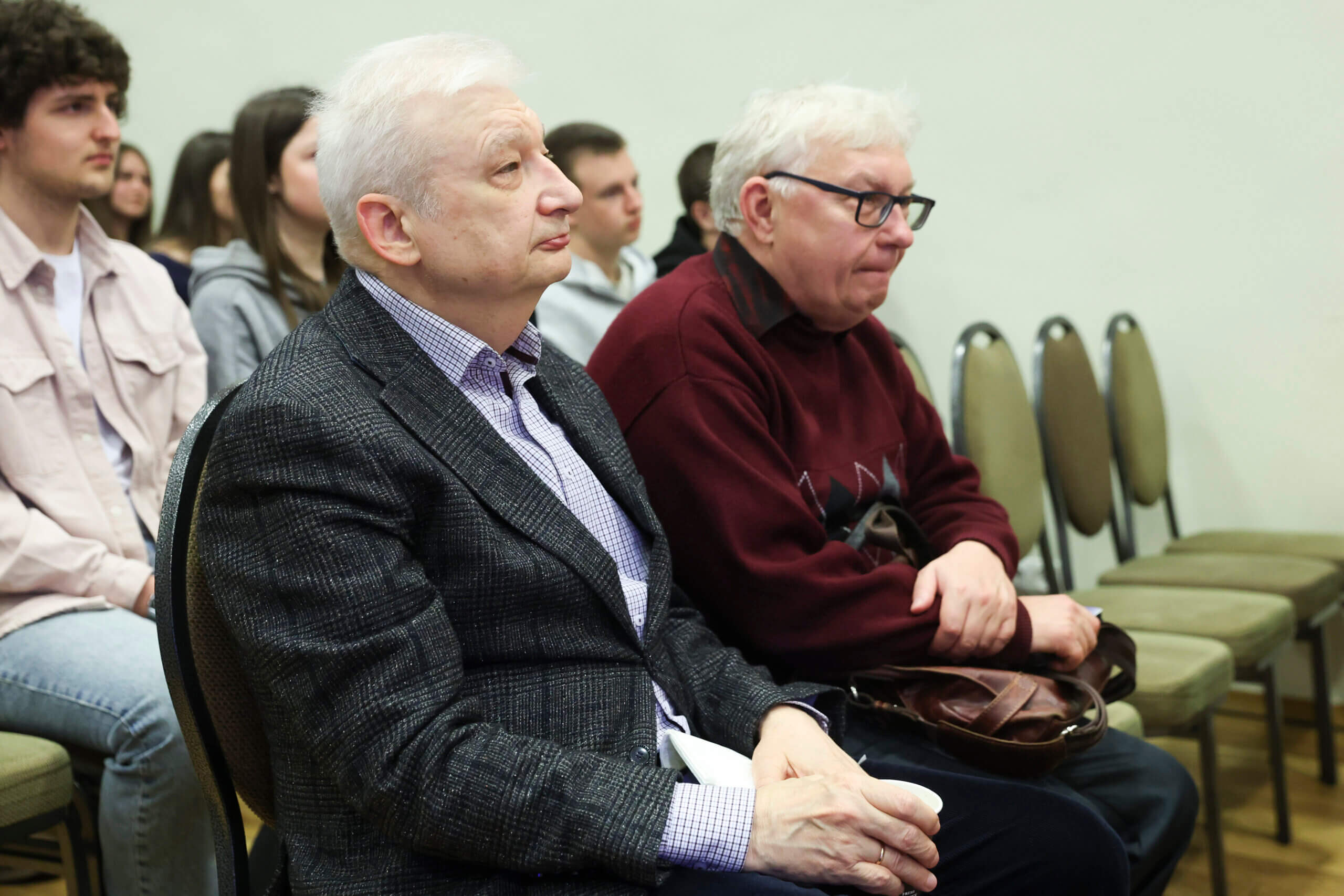
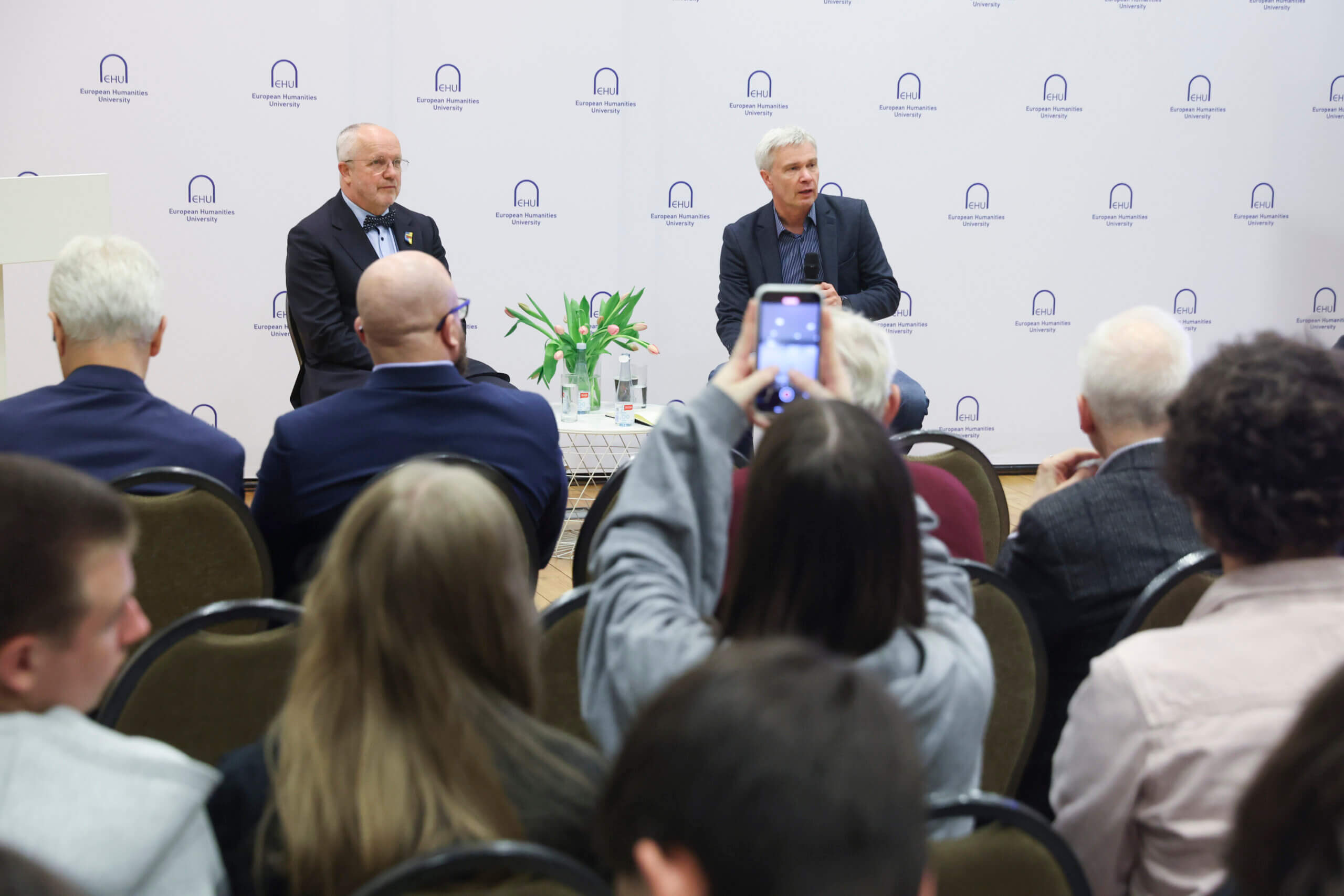
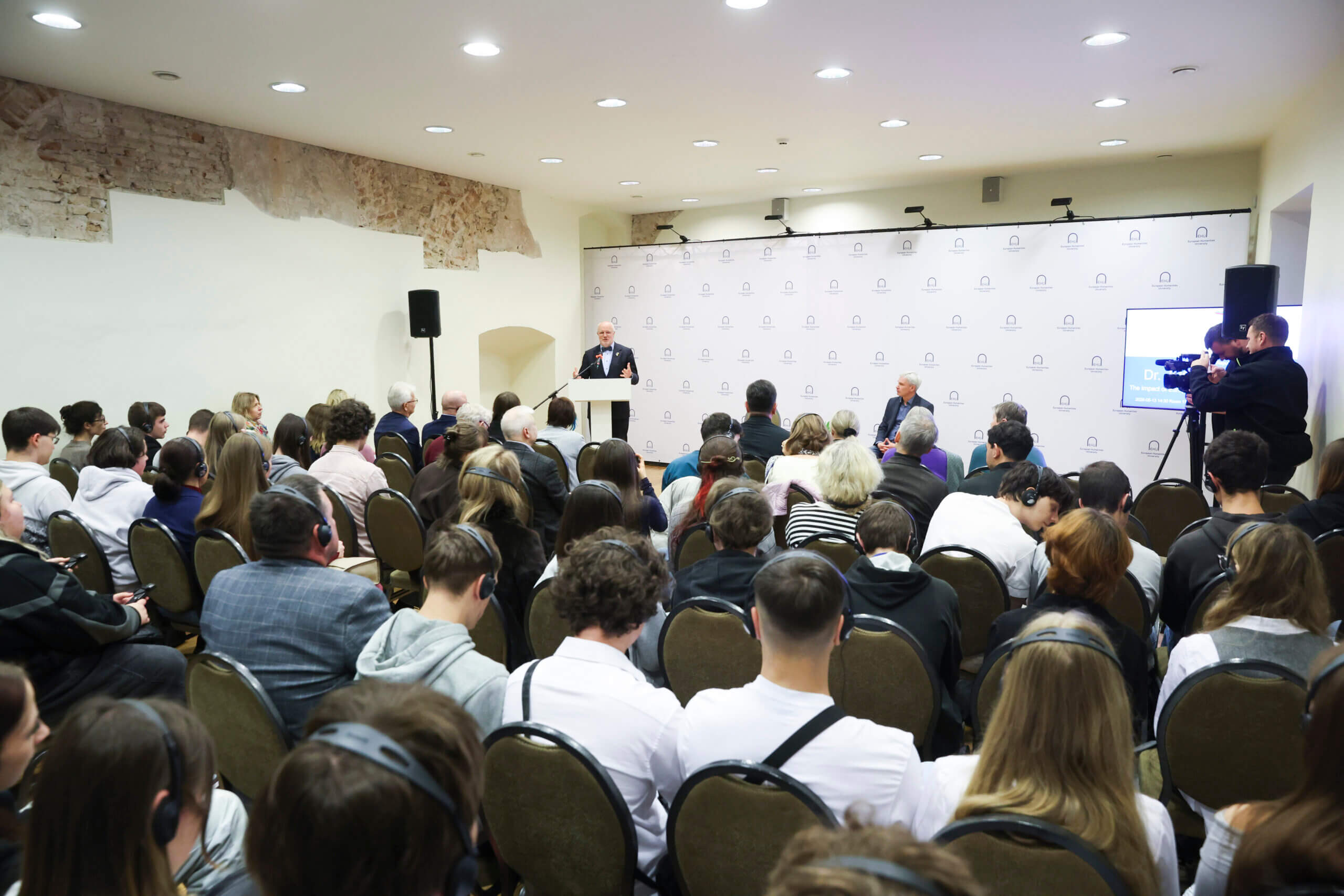
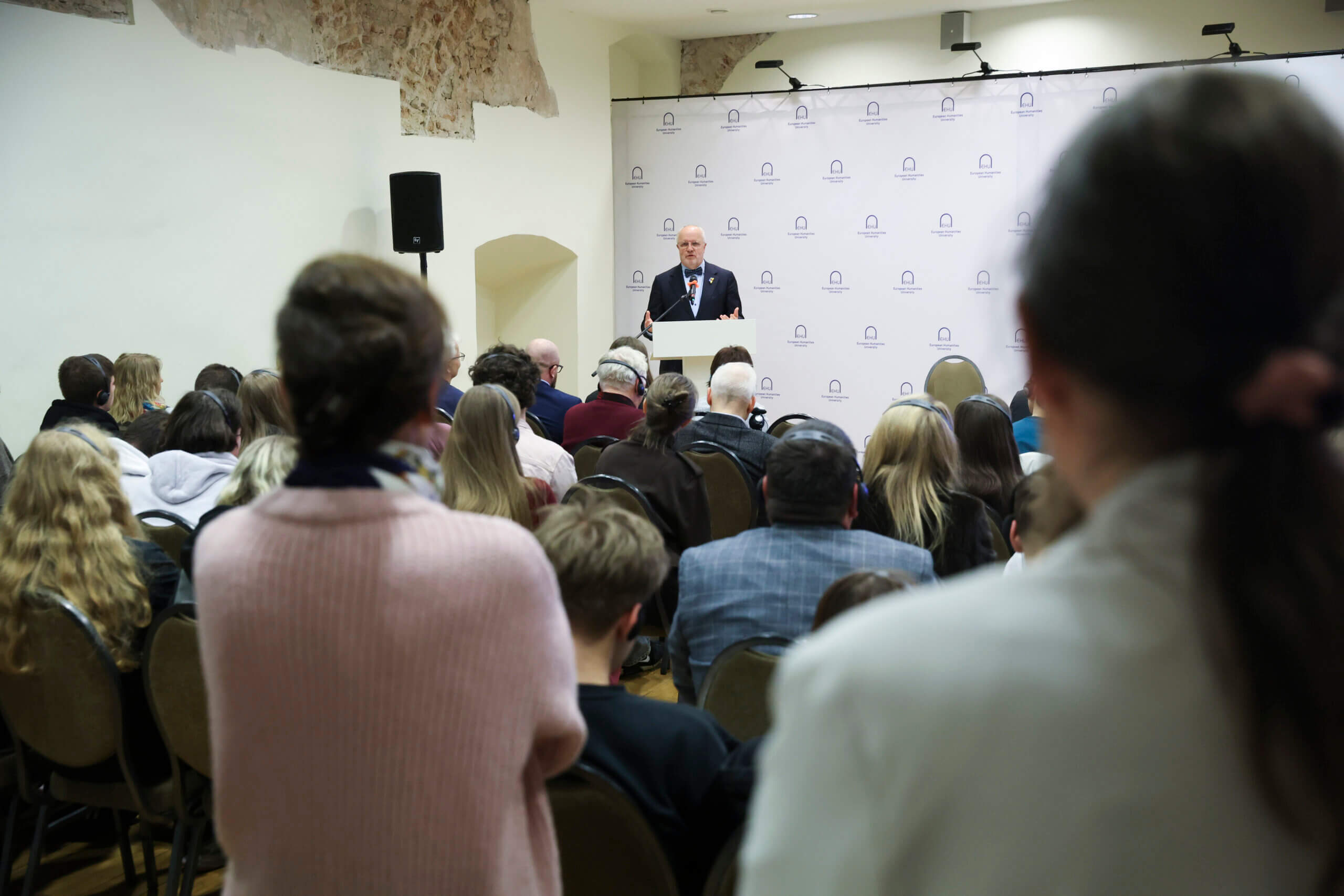
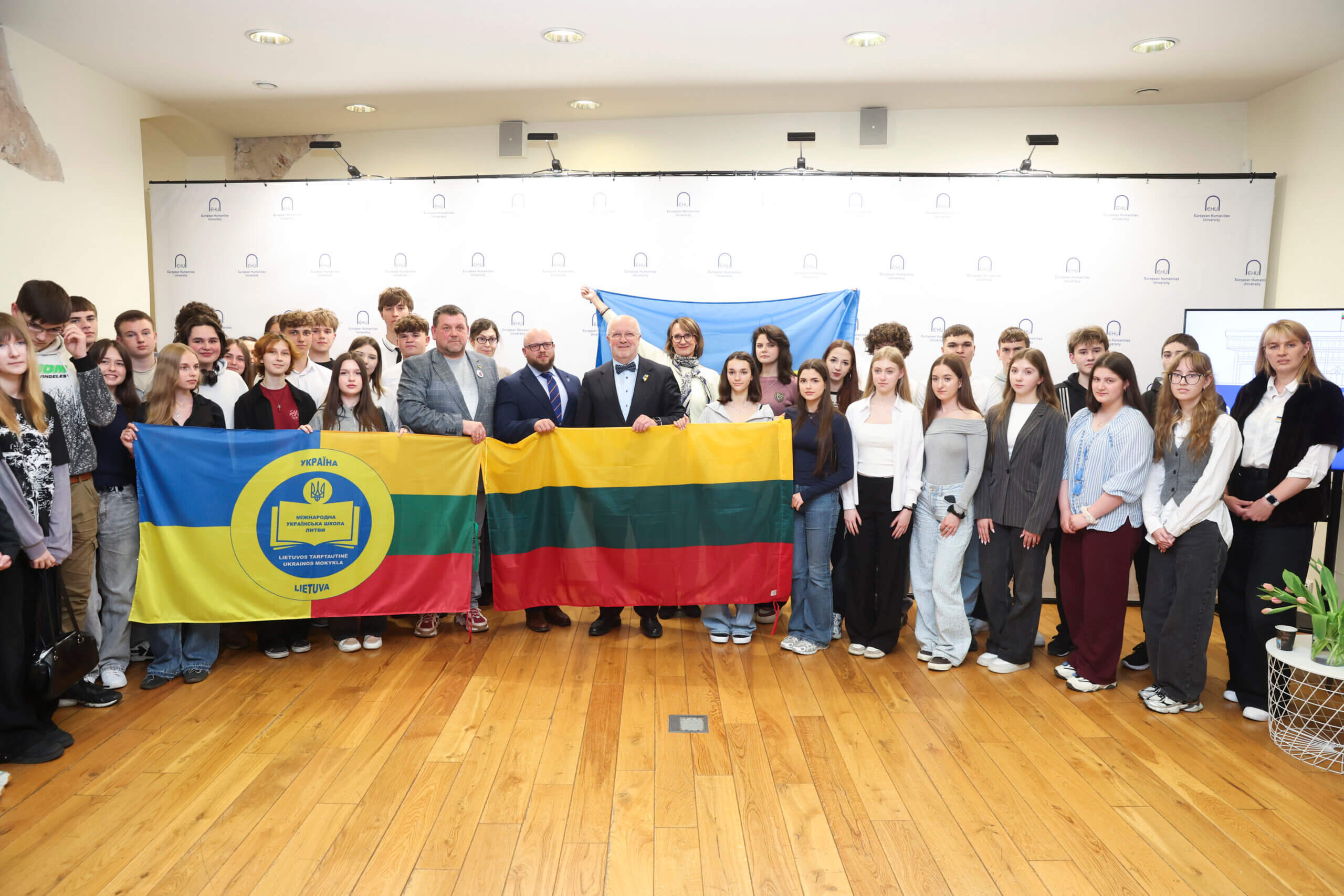
The event took place at the European Humanities University in Vilnius and brought together members of the university community, guests, and school students from the International Ukrainian School and Vilnius Francysk Skaryna Gymnasium, who were invited to take part in the discussion.
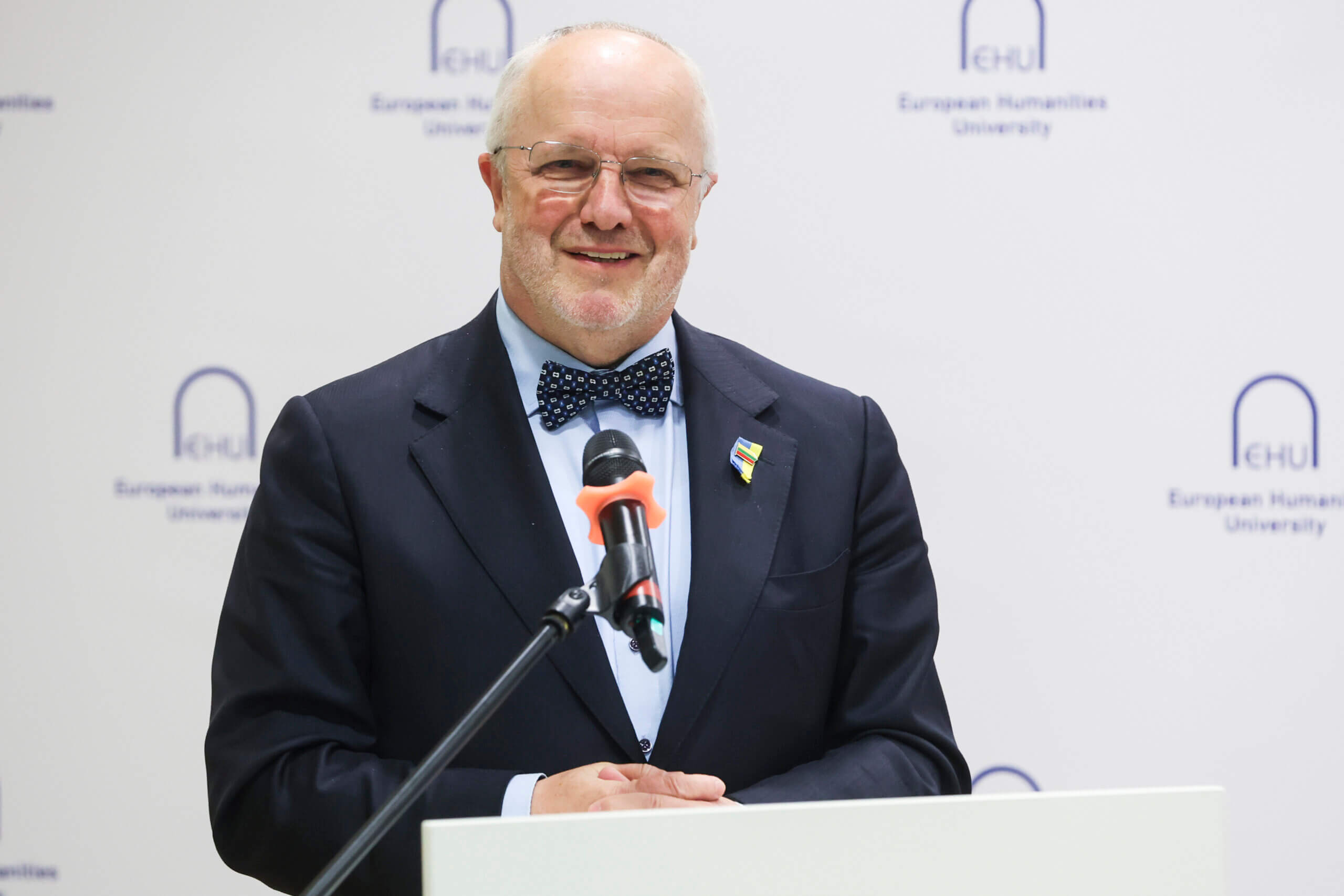
During the lecture, Dr. Juozas Olekas addressed the political, economic, and societal dimensions of European integration, emphasizing the opportunities that membership in the European Union opens for a country and its people. He highlighted, first of all, the opportunities created for young people including the possibility to study, receive a high-quality education, and gain international experience. Secondly, he noted that EU membership opens new markets for businesses, strengthening economic development and competitiveness. Thirdly, he pointed to the value of cultural exchanges, which allow societies to better understand Western European culture while also creating opportunities for Lithuania to present and share its own cultural identity.
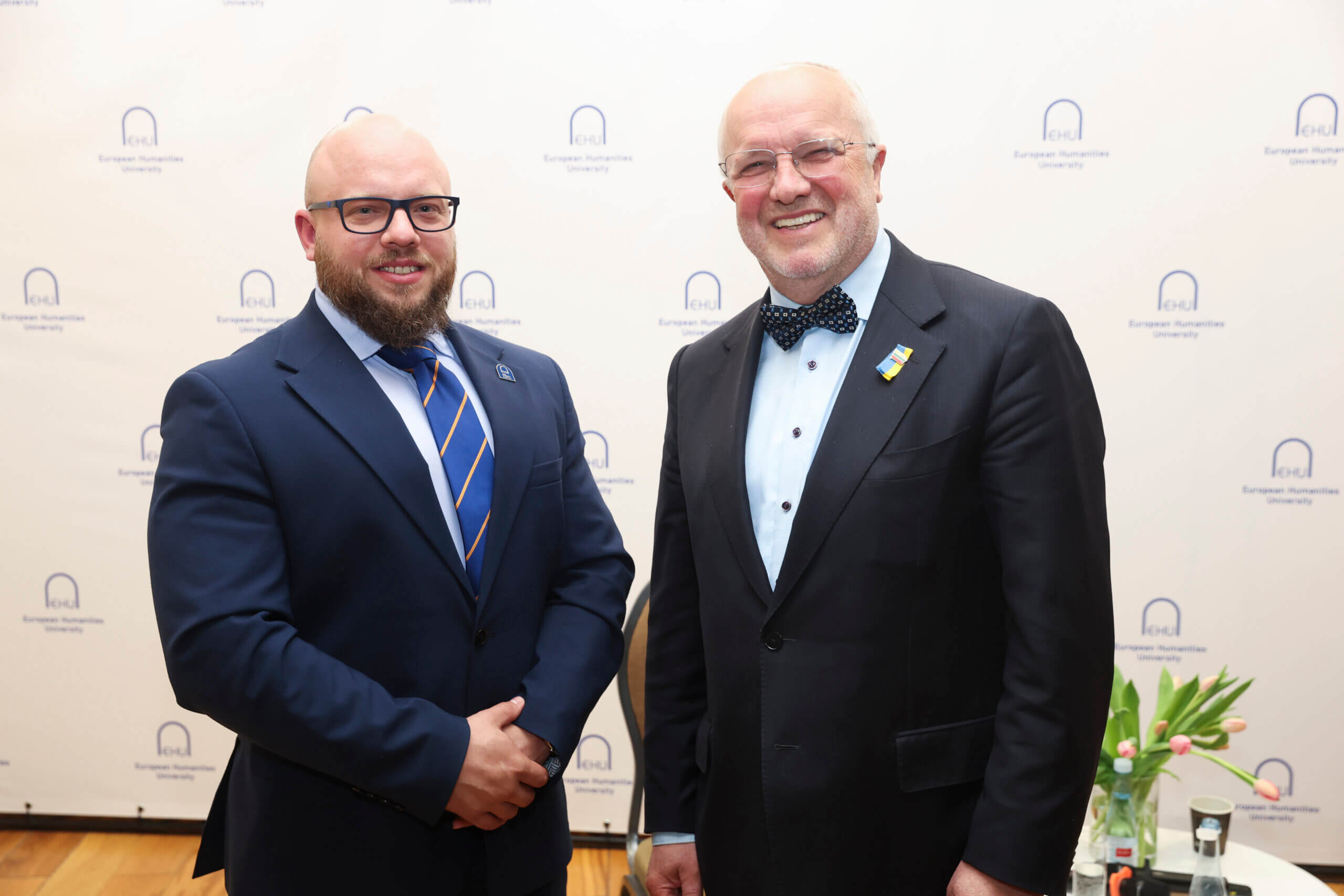
“Lithuania’s experience clearly shows that belonging to the family of European Union member states is an essential prerequisite for economic and cultural growth,” said Dr. Vilius Šadauskas, Rector of the European Humanities University.
According to the Rector, Lithuania’s accession to the European Union in 2004 significantly shaped the country’s development path. Without EU membership, Lithuania’s economic, social, and cultural progress would not have reached its current level. Today, Lithuania itself can share its best practices and support other countries on their path toward deeper European integration.
The discussion of European integration at the European Humanities University was especially meaningful. As Rector Dr. Vilius Šadauskas noted, EHU aims to serve as a gateway and a bridge to Western Europe for young people from Eastern European countries.
For students from Belarus, Ukraine, Moldova, and other countries, studying in Lithuania provides an opportunity not only to receive a European higher education, but also to experience European life in practice through everyday communication, academic exchange, life in the city, and interaction with fellow students and professors. Most importantly, students acquire knowledge and experience that can later help them contribute to the transformation of their own countries.
Dr. Juozas Olekas also underlined the importance of helping young people understand Lithuania’s own historical transition from the Soviet sphere to the democratic world. According to him, by seeing at a young age what life in a democratic society looks like and what opportunities it offers, students can become part of that world, enter international environments and markets, and later return home to create positive change in their own societies.
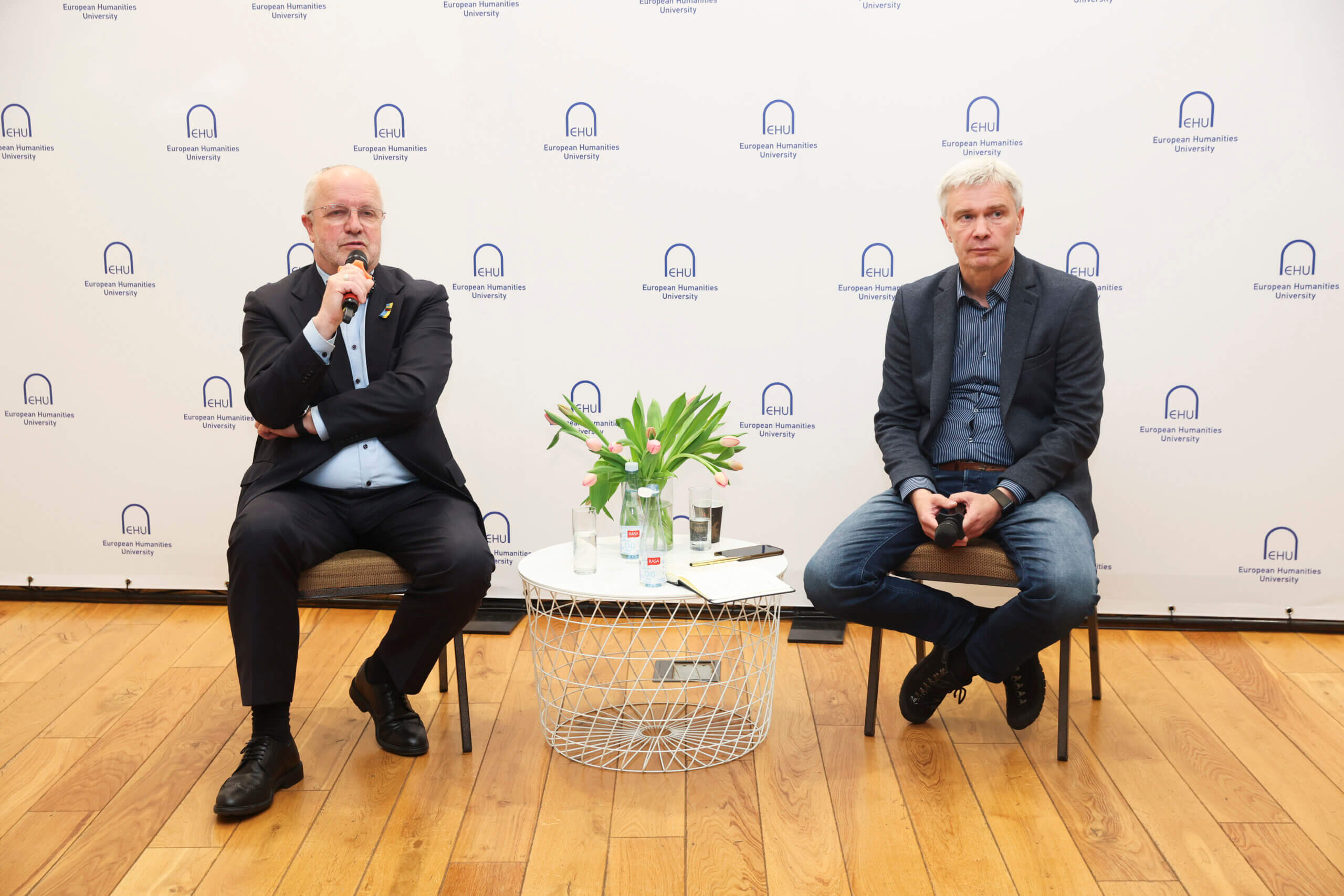
The lecture was conducted in Lithuanian and moderated by Rimvydas Paleckis. Its interactive format encouraged participants to ask questions and engage directly with the Speaker of the Seimas, creating an open dialogue between students, young people, academics, and policymakers.
A student of the European Humanities University, Yaroslava Melnik, also shared her personal experience of studying in Lithuania. She noted that choosing Lithuania and a European university was the right decision for her. Having lived in Germany, Ukraine, and Belarus, she described Lithuania as a calmer place and reflected on the importance of being able to speak openly about the realities of Belarus and Ukraine.
“We can explain to Europeans what is happening in Belarus and Ukraine because we understand the people of those countries best,” Yaroslava said.
Having studied in Lithuania for four years, she emphasized that countries belonging to the European Union provide young people with the freedom to express their opinions, as well as broader opportunities for personal growth, critical thinking, and social change.
The participation of students from the International Ukrainian School added a meaningful dimension to the event, reflecting the importance of youth engagement, intercultural dialogue, and solidarity within the European educational space.
The event also took place in the broader context of ongoing discussions about the future of European enlargement. Ukraine, Moldova, and Georgia are among the countries that have been granted EU candidate status, while European integration remains a key aspiration for many societies across Eastern Europe.
European Humanities University expresses its gratitude to Dr. Juozas Olekas, Rector Dr. Vilius Šadauskas, the invited guests, students from the International Ukrainian School, and all participants for their active involvement and contribution to the discussion.
Watch the video TV report