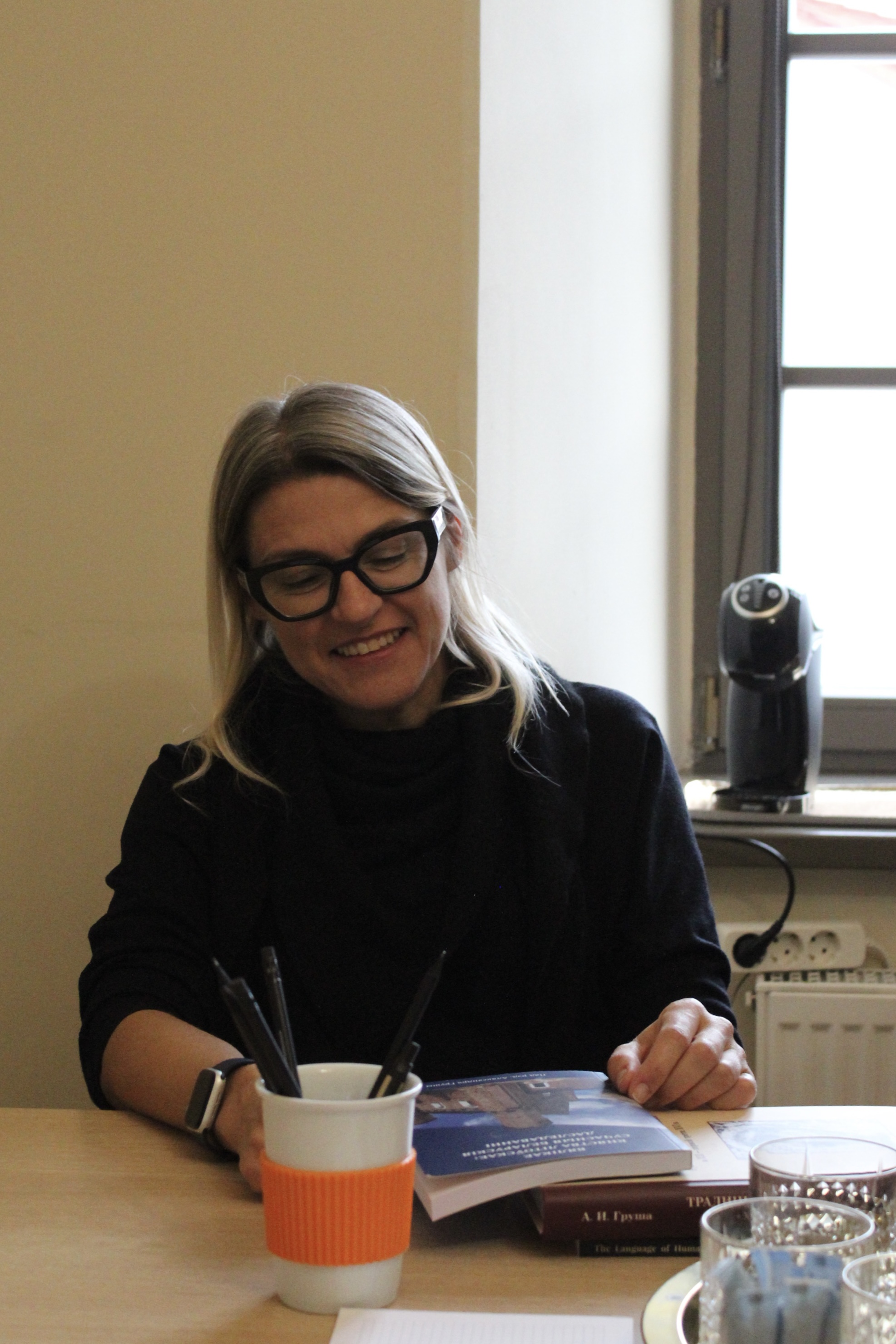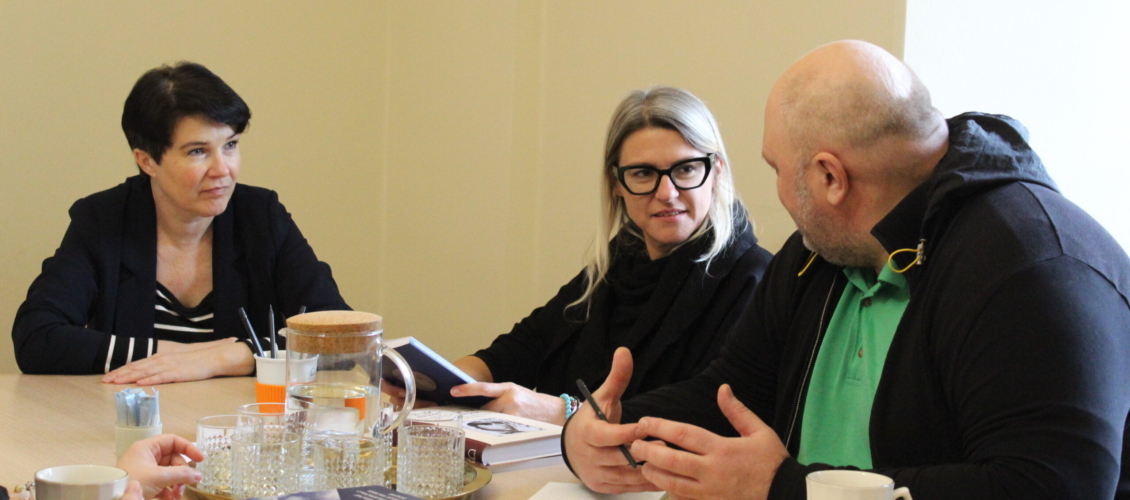
During her visit, Professor Getka delivered a series of lectures for EHU students and academic staff, focusing on contemporary cultural studies and critical perspectives on the Central and Eastern European region. The lecture topics included:
-
“Russia versus the Rest of the World”
-
“Colonial Cultural Myths” (4 academic hours)
-
“Polish-Belarusian Cultural Contacts in Russian Cultural Propaganda” (4 academic hours)
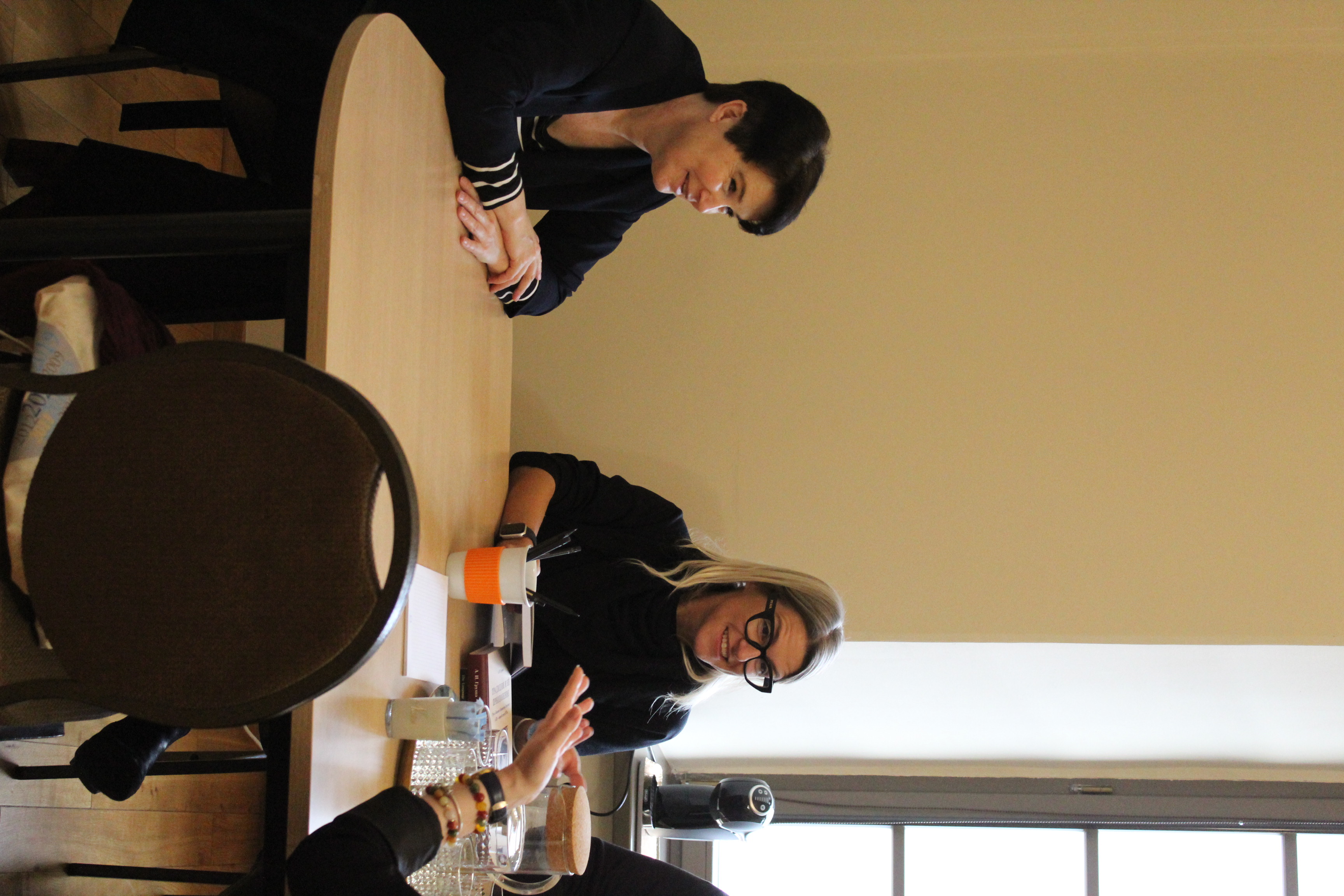
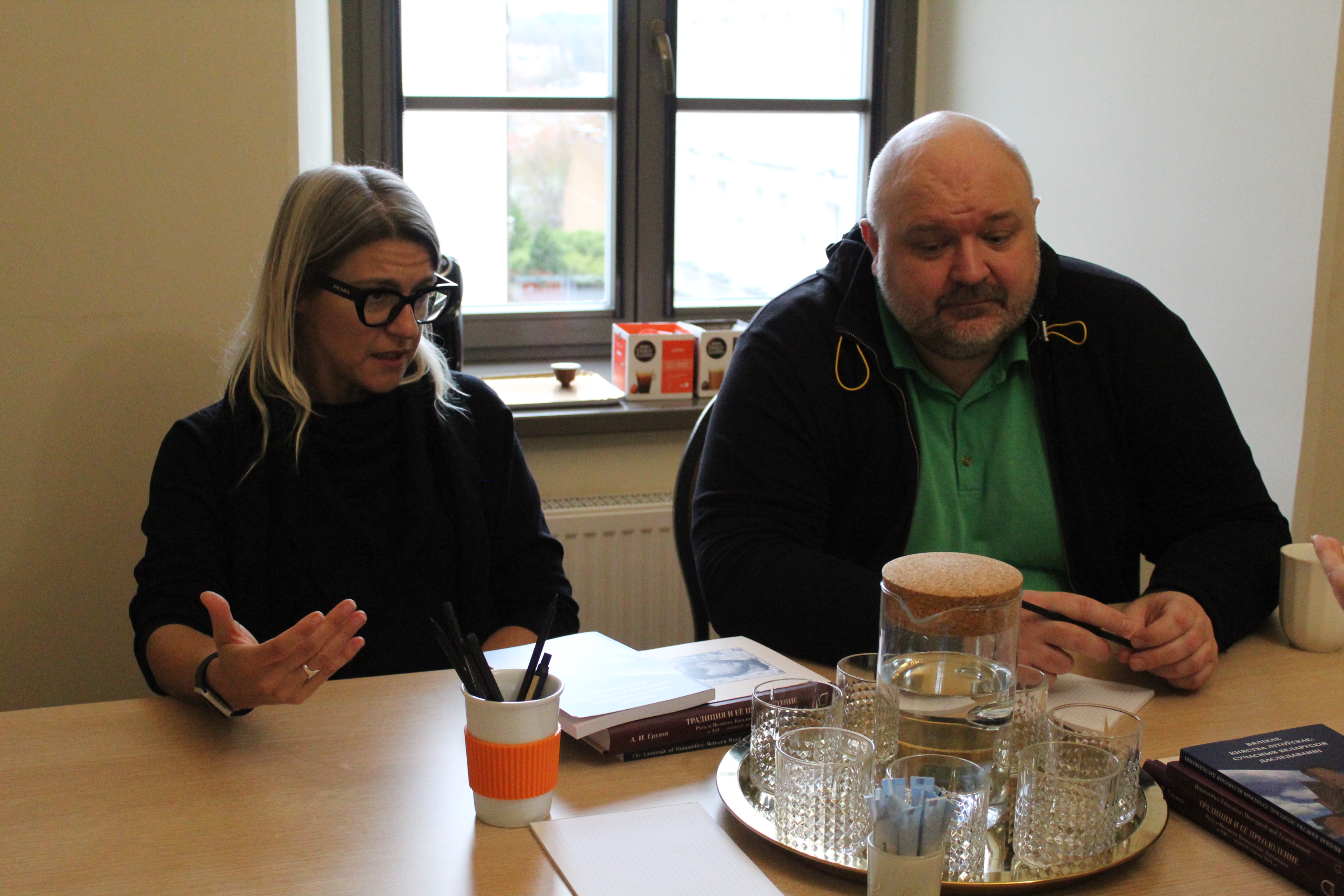
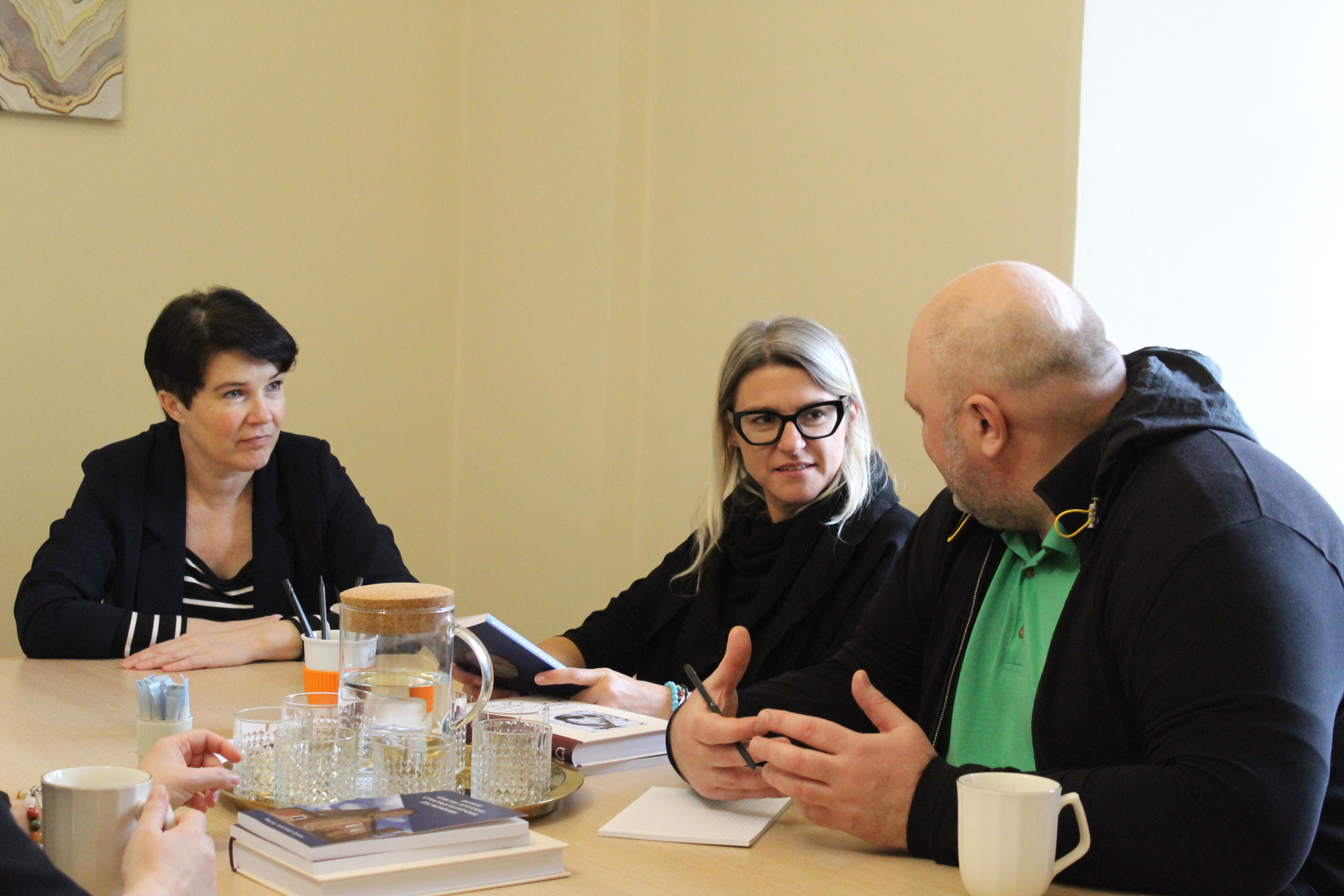
As part of the visit, Professor Getka also met with lecturers of the Bachelor’s programme “History”, where they discussed current approaches to teaching history, curriculum development, and opportunities for integrating comparative and intercultural perspectives into history education.
In addition to the teaching activities, the visit included meetings and discussions dedicated to future cooperation between the European Humanities University and the University of Warsaw, with a particular focus on joint academic, educational, and research initiatives.
From the interview with Professor Joanna Getka
— What was the main goal and motivation of your visit to EHU within the Erasmus+ programme?
J.G.: The main goal of our visit, in addition to didactic exchange, is to promote modern research methods in the study of Belarusian and Polish cultures, as well as the culture of Central and Eastern Europe more broadly. We aim to foster the integration of students and academic staff, exchange experiences, and develop sustainable cooperation.
— What experience or knowledge would you like to share with EHU students and colleagues?
J.G.: We would like to share contemporary research methods and interdisciplinary approaches to cultural studies, helping students and colleagues better respond to the demands of the modern world.
— What impressed you most about EHU and Vilnius during your visit?
J.G.: I was impressed by the open and welcoming atmosphere at EHU. Vilnius, with its rich history and cultural diversity, creates unique conditions for learning and academic dialogue.
— Do you see potential for further cooperation between the University of Warsaw and EHU?
J.G.: Absolutely. I see significant potential for developing exchange programmes, joint research projects, and educational initiatives.
— Are there any ideas for joint projects or initiatives you would like to develop together with EHU in the future?
J.G.: We would like to develop blended formats, including summer schools and specialised courses focused on language and culture.