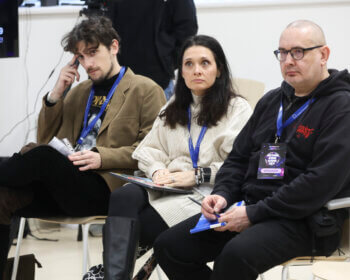
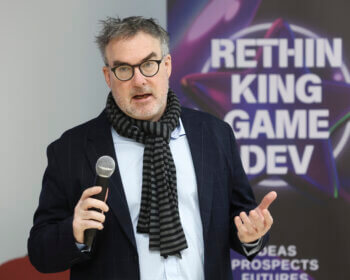
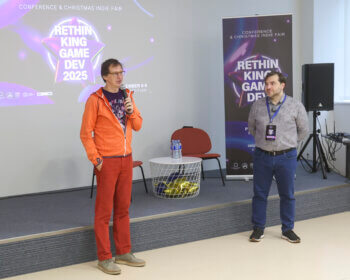
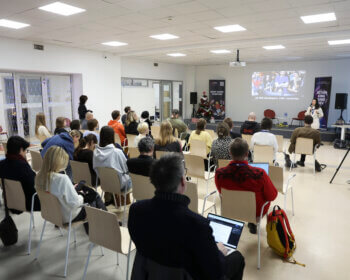
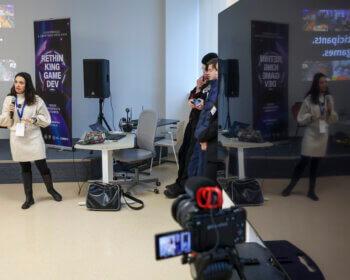
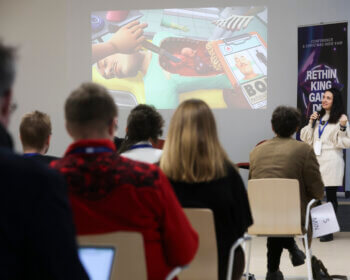
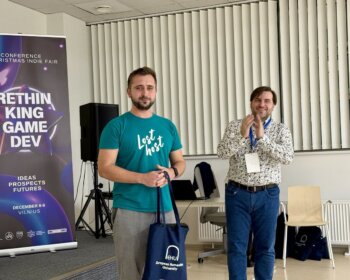
Through expert talks, practical sessions, academic debates, networking, and hands-on workshops, the conference highlighted how game development continues to evolve as an interdisciplinary field shaping culture, technology, and education.
Day 1: Academic Perspectives on Game Development and Cultural Discourse
The opening day of the conference focused on critical, theoretical, and cultural approaches to game development and game studies.
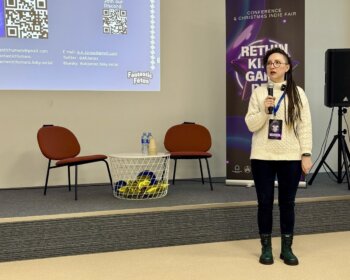
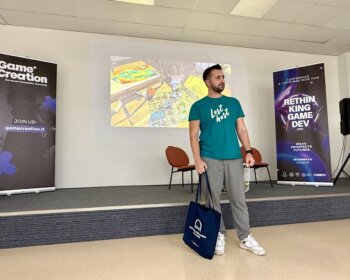
Maria Burns Ortiz opened the day with insights into how game jams function as powerful learning ecosystems helping accelerate skill development and fostering collaboration among new creators. Yaraslau Kot followed with a session on narrative design, demonstrating how professional storytelling techniques can be adapted into teaching frameworks for emerging writers. After a short break, J. Tuomas Harviainen explored high-trust cultures in game development, highlighting how transparency and open information flow enhance creative collaboration and team efficiency. A compelling and socially engaged talk by Aleksandra Jarosz examined abusive design through her game Fantastic Fetus, illustrating how interactive media can illuminate issues of reproductive rights in Poland. In the afternoon, Michał Mochocki presented the historical RPG 1581, discussing how transformative play can reshape understandings of heritage from the Polish–Lithuanian Commonwealth. Thomas Feichtmeir then analyzed the costs of historical accuracy, examining the tension between authenticity, gameplay considerations, and real-world production limitations. The academic program concluded with Aliaksandr Razhkou’s exploration of religion as a system-forming element in historical-social simulators, shedding light on how belief structures shape player behavior and mechanical design. The day ended with a round-table discussion on forming the Baltic Game Study & Game Education Society, signaling a major step toward long-term academic collaboration in the region.
Day 2: Skills, Industry Insight, and Emerging Talent
The second day shifted into a developer-oriented format, blending practical sessions with industry expertise and opportunities for professional growth.
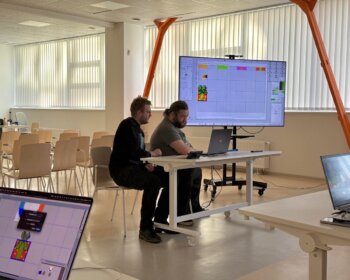
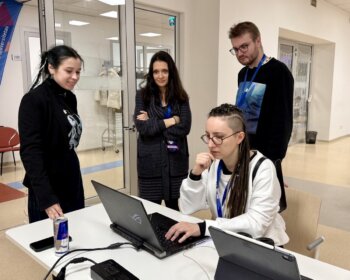
The Indie Showcase and morning networking brought together emerging developers, students, and professionals to exchange ideas and present early-stage projects. Students and all participants showed their games to the experts.
Keynote speaker Mike Feoktistov offered a deep dive into player motivation, explaining how well-structured goals sustain meaningful engagement. This was followed by Lizaveta Klimovich’s applied workshop on creating a competitive CV for the game industry, addressing real-world entry points for young professionals.
The afternoon featured a trio of advanced talks:
- Thomas Feichtmeir — fundamentals of pixel art and visual production
- Michał Mochocki — commercial potential of historically grounded games
- Maria Burns Ortiz — the power of game jams as a tool for rapid learning and prototyping
The mid-day Game Pitching Session provided a platform for new teams to present their concepts to industry specialists, receiving valuable critique and encouragement. The day concluded with R&D in Educational Software, presented by Wojciech Pazdur, who highlighted innovation at the intersection of technology and applied training. Outstanding projects and contributions were recognized during the closing awards ceremony.
Day 3: Hands-On Creativity at the Pixel Art Workshop
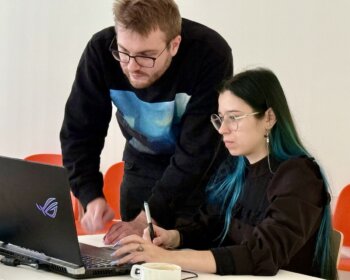
The final day of the conference offered an immersive, practice-based experience during the Pixel Art for Beginners Workshop, attended by a full group of pre-registered participants.
Led by experienced artists, Thomas Feichtmeir and Aleksandra Jarosz, the workshop covered:
- Fundamentals of shading and color theory
- Palette creation and visual coherence
- Character and environment sketching
- Sprite animation basics
- Asset preparation for modern engines
Participants worked on individual mini-projects, receiving personalized feedback throughout the session. The collaborative atmosphere encouraged informal show-and-tell presentations, helping participants build confidence and refine their artistic voice. The day concluded with reflections from the organizers on the importance of technical skill-building, artistic experimentation, and cross-border cooperation for the future of the regional game industry.
Impact: Strengthening the Future of Baltic & Eastern European Game Development
Over three days, Rethinking Game Dev 2025 established itself as a key platform for dialogue, collaboration, and professional growth in the Baltic and Eastern European game development landscape.
The conference:
- Bridged academic inquiry with industry practice
- Supported emerging talent through showcases, pitching, and career-focused sessions
- Encouraged cross-disciplinary and cross-border cooperation
- Highlighted socially conscious and heritage-focused approaches to game design
- Provided practical training through hands-on workshops
Organizers emphasized their commitment to expanding the conference and Indie Fair in 2026, aiming to further strengthen ties between academia, industry, and creative communities.
These collective efforts and the strong spirit of community-building demonstrated throughout the conference confirms that the launch of EHU’s new Game Creation study program (gamecreation.lt) is not only meaningful but essential, which aims to further strengthen the region’s talent ecosystem. The program was submitted for accreditation to the Lithuanian Education Quality Assessment Center in March 2025.
Rethinking Game Dev 2025 demonstrated that the future of game development in the region is innovative, cooperative, and culturally rich, and that this growing ecosystem is ready to take its next step forward.
The organizers extend their sincere gratitude to all speakers, partners, and supporters who contributed to the success of the conference. Special thanks go to the Lithuanian Game Developers Association and its project manager, Ricardas Jaščemskas, whose dedication and collaboration played a key role in shaping the academic program and ensuring the smooth execution of the event. The commitment of the entire organizing team made it possible to bring together such a strong group of experts and foster meaningful dialogue within the Baltic game studies community.