The human world is always the product of man’s amor mundi,
a human artifice whose potential immortality is always subject to the mortality of those
who build it and the natality of those who come to live in it
– Hannah Arendt, The Promise of Politics
The end of World War II and especially the fall of the Soviet Empire gave rise to the notion of the “end of history.” This conviction that the world was inevitably progressing toward political and moral advancement ushered in a new era of politics, one that elevated procedural and administrative governance while diminishing political will, individual responsibility, and meaningful political action.
Hannah Arendt warned against such developments. She foresaw the danger of reducing the state to an administrative machine, resolving conflicts through bureaucracy rather than political deliberation, arguing that this would not lead to the abolition of politics, but rather to a new form of despotism on a massive scale.
Today, the lack of will to defend the European values on one hand, and the growing polarization, the rise of authoritarian and anti-democratic populist movements, and the erosion of both the rule of law and public trust in governments across the West. These trends can be seen as a backlash against depoliticization and as an attempt by the masses to reclaim the public sphere. These shifts raise urgent questions about the future of Europe. Furthermore, the return of war to the European continent shattered the illusions of this “end of history” mindset. The reemergence of political violence and the use of force exposed the limitations of a worldview that sought to depoliticize public life. With these challenges in mind, we must ask: does politics, rooted in individual responsibility and action, still hold meaning?
Reflecting on the horrors of the 20th century – the rise of totalitarianism, world wars, and the Holocaust, Arendt argued that the promise of politics lies in human freedom and greatness. Real freedom, she maintained, emerges only through action, especially in seemingly impossible circumstances, when individuals resist oppression and defy the odds. In the political realm, we can be truly free – not driven by inner compulsions or bound by material necessity. For Arendt, freedom exists only in the unique and fragile space of political life.
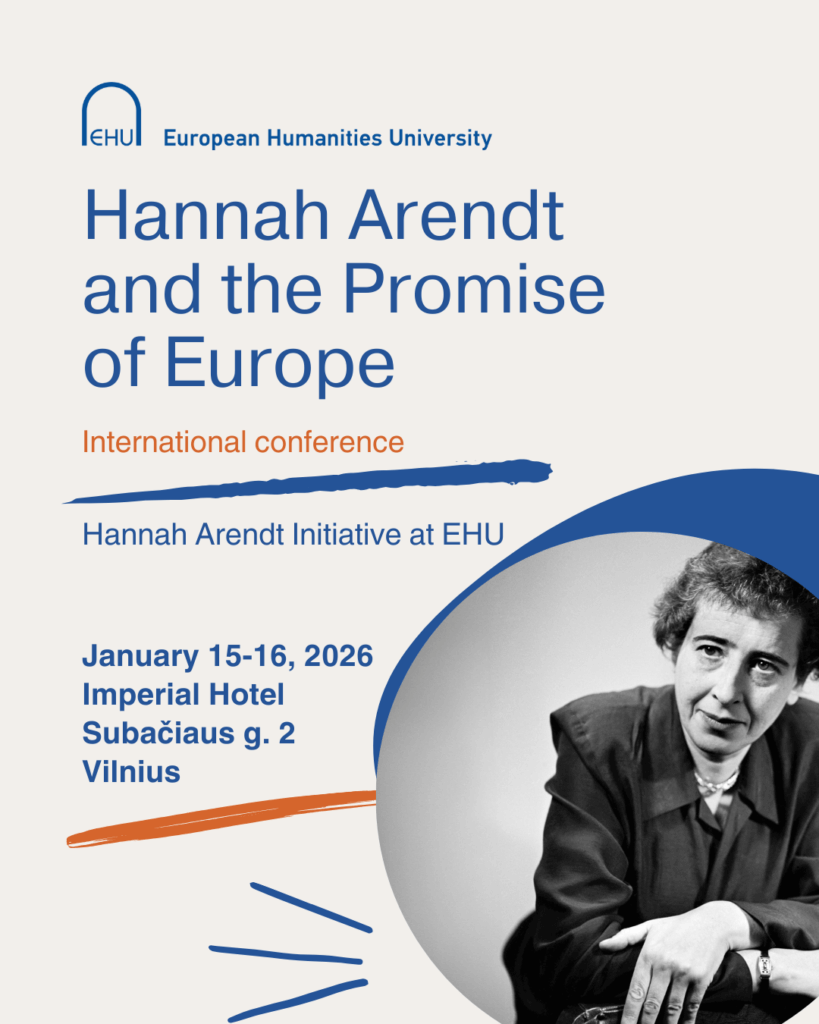
The conference aims to gather leading Arendt experts and researchers, relying on the philosophy of Arendt to think through 21st Europe’s challenges, reflecting on several key questions: What can Arendt’s political thought offer us today? How might her ideas of natality, public space, and vita activa help us reimagine a European politics marked by division and the return of power politics? Can her uncompromising defense of judgment and action reignite democratic discourse? What does it mean to defend Europe and European values today? Does Europe still possess the internal resources needed for political renewal and democratic cohesion? And finally, what could serve as a positive foundation for political life in an age increasingly defined by fear, polarization, and violence?
See the full program here.Program.docx