The conference addressed key challenges facing social sciences and humanities in Central and Eastern Europe, focusing on the region’s current political, social, and epistemological transformations. Particular attention was given to questions of knowledge production under conditions of authoritarianism, war, migration, exile, and structural marginalization, making the conference highly relevant to contemporary regional debates.
International Participation
The conference brought together scholars from a wide range of countries, including Lithuania, Belarus, Ukraine, Poland, Germany, France, the Czech Republic, Slovakia, Latvia, Estonia, the United States, and the United Kingdom. This diverse participation reflected the international and interdisciplinary character of the Topos community and of the debates surrounding the region.
Keynote Speakers
Two keynote lectures framed the main intellectual agenda of the conference:
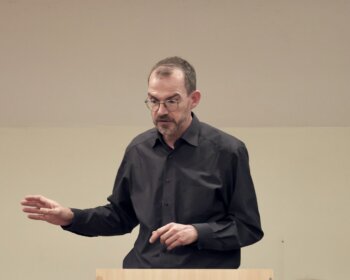
Mykola Riabchuk (Ukrainian Academy of Sciences) delivered a keynote lecture titled “How to Fix Epistemic Injustice? Ukraine’s Experience,” addressing epistemic marginalization, post-imperial legacies, and the challenges of producing knowledge during war.
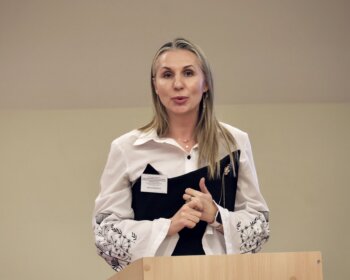
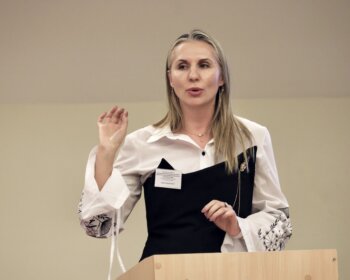
Epp Annus (The Ohio State University / Tallinn University) presented “Confronting Interimperial Invisibility: Epistemic Silences and Vulnerable Bodies,” focusing on epistemic silencing, embodiment, and power relations in imperial and post-imperial contexts.
Both lectures sparked extensive discussion and resonated strongly with the conference’s regional and theoretical focus.
Panels and Key Discussion Topics
Across five thematic panels, participants discussed a wide range of interrelated issues, including:
- Re-framing Central and Eastern Europe and addressing epistemological challenges in studying the region;
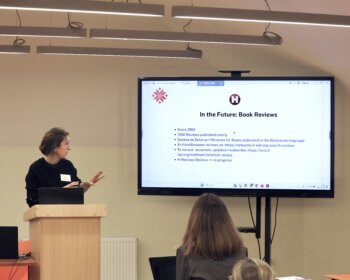
- The role of academic journals in and for the region, with comparative perspectives from leading scholarly publications;
- Knowledge production in emigration and exile, including responses to war-driven displacement and political repression;
- Overcoming marginalization and gaining visibility in European and global academic dialogue;
- Promoting anti-imperial approaches and practices through scholarly networks, forums, and partnerships.
Selected presentations addressed topics such as decolonizing knowledge production, epistemic injustice, the future of universities in crisis contexts, and the ethics of research under political pressure.
Outcomes and Future Perspectives
As a key outcome of the conference, participants discussed new formats of academic cooperation. Selected materials and reflections emerging from the conference will be published in future issues of Topos, continuing the dialogue initiated during the event.
The conference reaffirmed Topos’s role as a situated intellectual platform for critical reflection on Central and Eastern Europe and highlighted the importance of academic solidarity, openness, and collaboration in times of profound regional transformation.